
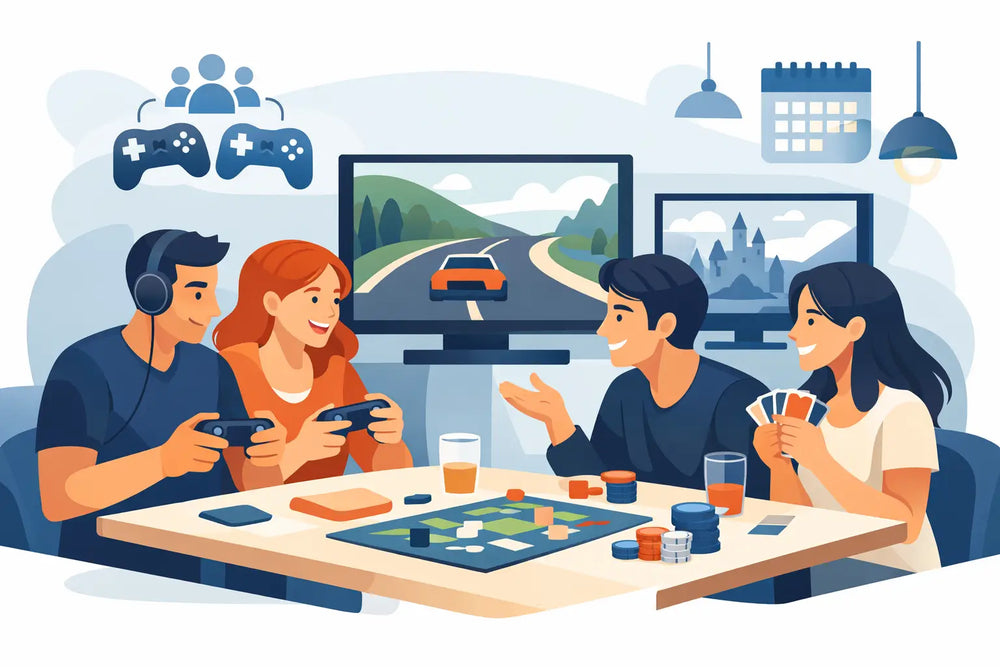
While a good shop can sell you a game, a booster pack, or a repair. A great shop gives you a reason to come back next week. That is where gaming nights and regular events matter. They turn a store from a place you visit when you need something into a place you want to be, especially if you care about trading cards, retro games, local multiplayer, and the kind of hobby knowledge you do not get from a big-box shelf.
For a lot of players, the difference is simple. Buying online is easy. Finding a real community is harder. If you are into Magic, Pokemon, retro collecting, console gaming, or just want somewhere local where people actually know the difference between a resurfaced disc and a damaged one, regular in-person events solve a problem that inventory alone cannot.
What gaming nights and regular events actually do
At the store level, events create consistency. At the player level, they create trust. If people know there is a card night every week, a casual fighting game meetup every month, or a trade-focused community day on a predictable schedule, showing up becomes part of routine instead of a one-off decision.
That matters more than most retailers admit. Hobby communities do not grow from random announcements. They grow from repetition. A player who is unsure about joining a tournament is much more likely to attend if they know the event will be there again next week. A parent deciding whether to bring in a younger player feels a lot better when the schedule is clear and the environment is familiar. Collectors and regulars tend to spend more time in a shop when there is something happening beyond transactions.
There is also a practical side. Events help people learn what a store is actually good at. A customer might first come in for a controller repair or to browse used PS2 games, then realize the shop also runs trading card events, carries singles, or has a local crowd for the games they already play. That overlap is where community starts to feel real.
Why regular events work better than one-off promotions
One big event can bring in traffic. It can also disappear from memory fast. Regular events do more durable work because they set expectations.
If a store runs a one-time tournament with a strong turnout, that is useful, but it does not automatically build a scene. Players need to know when to show up, what the format is, whether beginners are welcome, and whether the same faces will be there next time. Predictability lowers the barrier to entry.
This is especially true in smaller regional markets. In places where players may be balancing work, school, family schedules, or a drive into town, convenience matters. A reliable Friday night card event or a monthly retro meetup gives people enough structure to plan around. It also helps avoid the common problem of fragmented communities where ten interested players exist but never appear in the same room at the same time.
There is a trade-off, though. Running regular events takes effort. Staff time, table space, store hours, product allocation, and crowd management all matter. A bad event schedule can create dead spots, overlap with other local activities, or frustrate shoppers who came in for a quick purchase and found the floor packed. So consistency matters, but so does choosing formats that actually fit the store and local audience.
Gaming nights and regular events help new players stick
Experienced players will often find a community eventually. Newer players usually will not unless someone makes the first step easier.
That is one of the strongest arguments for gaming nights and regular events. They create a lower-pressure entry point. A structured but approachable event gives people permission to participate without feeling like they need expert-level knowledge on day one.
This matters in card games more than almost anywhere else. Buying a few packs is easy. Learning deck building, rules interactions, card values, and event etiquette is another thing entirely. New players need a place where they can ask questions without getting brushed off. The same goes for someone just getting into retro collecting who wants to understand condition, authenticity, or what repairs are worth doing on older hardware.
A healthy event environment teaches without making a big show of it. Players pick up format rules, trade habits, tournament pace, and hobby standards by being around other people who already know the rhythm. That kind of knowledge transfer is hard to replicate through product pages or social media posts.
The in-store experience still matters
Physical media and collectible hobbies are not just about owning items. They are about context. Seeing a wall of games is one thing. Talking to someone who actually knows the library of a console, remembers which version has the better soundtrack, or can explain why a specific controller issue keeps happening is another.
Events bring that context to life. They let a shop show what it knows in real time. A trading card night shows whether the staff understands organized play and singles demand. A retro meetup shows whether the store really knows older platforms or just happens to stock them. A local multiplayer event proves whether the setup, hardware, and maintenance are solid.
That last part gets overlooked. Stores that work on consoles and controllers have an advantage when they host events because reliability matters. Nobody wants a tournament station with stick drift, overheating issues, bad HDMI output, or unreadable discs. Technical experience is not just a service category. In a live event setting, it supports the whole experience.
What players actually want from event nights
Most regulars are not asking for flashy production. They want events that start on time, make sense, and feel worth attending.
That usually means a few basics done well: clear formats, fair entry expectations, enough space, and staff who can answer questions without turning every interaction into a sales pitch. People also want a reason to believe their time will be respected. If an event is always delayed, poorly explained, or inconsistent from week to week, turnout drops fast.
It also depends on the crowd. Competitive players and casual players often want different things, and a store has to be honest about that. A serious weekly card event may benefit from tighter structure and stronger prize support. A community game night may do better with a looser setup that encourages drop-ins, trades, and conversation. Trying to force every event into the same model usually hurts both groups.
For local communities, the best schedule is often a mix. One dependable competitive night, one more casual or beginner-friendly option, and occasional specialty events can cover a lot of ground without stretching staff too thin.
Why this matters for collectors too
Collectors are sometimes treated like they sit outside event culture, but that is not really true. They may not all join tournaments, yet they benefit from active store communities in a big way.
When regular events bring people through the door, collectors get a stronger local network for trades, sales, wish-list finds, and platform knowledge. A community with active foot traffic tends to produce better inventory circulation. More people bring in games, cards, and hardware when they already have a reason to visit. That improves selection for everyone.
Events also help condition-conscious buyers make better decisions. In a real shop setting, you can see how a business handles products, discussions, and standards. If a store is serious about repair quality, disc condition, authenticity, and proper hardware testing, that tends to show in person. For collectors, confidence matters almost as much as price.
Local community is still the long game
Online convenience is not going away, and no local store should pretend otherwise. If someone wants the cheapest possible listing with no conversation attached, that market exists. But price alone is not the full picture for a lot of gamers and collectors.
What keeps a local shop relevant is the part the internet cannot replace well: seeing products before you buy, getting repairs from people who know the hardware, talking to staff who understand the difference between common stock and hard-to-find items, and showing up to an event where your hobby feels normal instead of niche.
That is why Game Quest and shops like it benefit from doing events the practical way. Not oversized promises. Not forced hype. Just a dependable schedule, a useful in-store experience, and a space where people can actually play, trade, ask questions, and keep the local scene moving.
If you want a stronger gaming community, it usually does not start with a giant event. It starts with one good night, run well, and repeated often enough that people know it is real.