
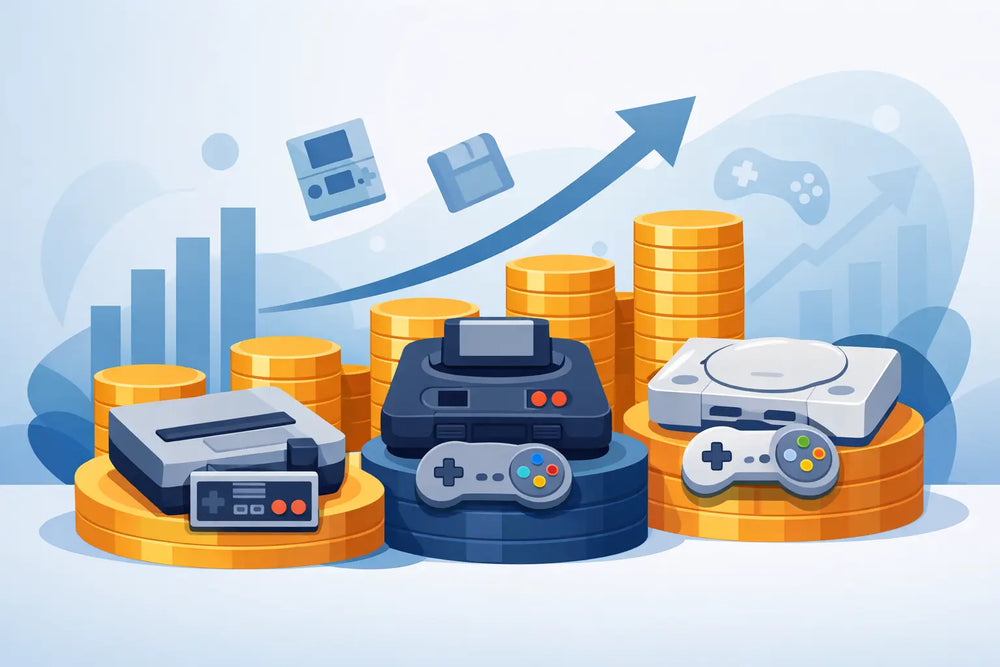
A loose NES with yellowed plastic and one controller can still sell fast. A boxed Sega Saturn in clean shape can disappear even faster. If you're asking which retro consoles hold value, the real answer is not just brand names. It comes down to demand, survival rate, condition, region, and whether collectors still want to actually use the hardware.
A lot of buyers assume the oldest console is automatically the most valuable. That is not how this market works. Some older systems are common enough that prices stay reasonable, while newer retro hardware with lower production runs or higher failure rates can hold stronger value over time.
Which retro consoles hold value most consistently?
The safest answer is usually first-party Nintendo hardware, followed by select Sega, Sony, and specialty handheld platforms. Nintendo tends to hold up because demand never really disappears. People still want to play original cartridges, the systems are familiar to casual buyers, and there is a constant flow of nostalgia from collectors who grew up with them.
The Super Nintendo is a strong example. It is iconic, durable enough compared with some later hardware, and tied to a library people still care about. An SNES in tested, clean condition usually has a stable buyer base. The Nintendo 64 also holds up well, especially in cleaner condition, with expansion pak included, original jumper pak, or hard-to-find color variants.
The GameCube has been one of the stronger performers for years because it sits in a sweet spot. It is old enough to feel retro, modern enough to plug into current setups with the right accessories, and tied to a library packed with first-party titles that collectors chase hard. Clean indigo, black, and spice orange units all get attention, and complete-in-box examples move into a different price bracket entirely.
Sony's PlayStation 2 is a different case. It has huge cultural weight and a massive install base, but because so many were sold, standard loose consoles do not always climb the way people expect. Certain models, cleaner slim revisions, and boxed units still matter, but the PS2's long-term value tends to come more from software and accessories than from every common console itself.
The Sega Saturn is one of the clearest examples of strong hardware value. It had lower market penetration in North America, and Saturn buyers tend to be serious collectors. That means demand stays concentrated while supply stays limited. Dreamcast can also hold solid value, especially complete systems in nice condition, but Saturn usually has a stronger scarcity story.
Why some consoles stay valuable and others flatten out
Scarcity matters, but it is not enough on its own. A rare console nobody wants is still a hard sell. The systems that hold value best usually sit at the intersection of limited supply and active demand.
Nintendo hardware benefits from broad demand. Casual buyers, long-time collectors, speedrunners, and CRT enthusiasts all want overlapping pieces of the same market. That gives systems like NES, SNES, N64, and GameCube a bigger base of potential buyers than many competing platforms.
Sega hardware often gets pushed by scarcity and collector enthusiasm. Saturn and Dreamcast buyers are usually not browsing casually. They know the models, they know the accessories, and they are often willing to pay more for tested, complete examples.
Sony hardware is more model-dependent. Original PlayStation systems can do well, especially earlier revisions and boxed units, but not every common PS1 or PS2 console is automatically a premium collectible. The buyer pool is big, but the original production numbers were also huge.
Then there is the issue of usability. A console can have nostalgia value, but if setup is awkward, repairs are common, or display compatibility is poor, that can cap demand. Buyers like hardware they can actually plug in and enjoy without turning the purchase into a project.
Condition is where value gets won or lost
Two of the same consoles can sell for very different numbers based on condition alone. That sounds obvious, but in retro, condition gaps can be severe.
A clean shell with minimal yellowing, intact controller doors, original cords, matching serial labels, and tested functionality will always draw more interest than a rough unit with replacement parts and uncertain issues. Boxed systems raise the ceiling even more, especially if inserts, bags, manuals, and matching paperwork are present.
Repairs are part of this conversation too. Some buyers are comfortable with serviced hardware. Others only want untouched examples. In practice, a properly repaired and fully tested console is often more attractive than a "maybe works" attic find. Disc-based systems especially benefit from laser checks, disc drive service, HDMI port repair on newer retro hardware, and internal cleaning.
If you are buying for long-term value, avoid the mindset that any cheap unit is a good deal. A bargain console with corrosion, cracked plastics, missing doors, or bad video output can turn into a money pit fast.
Handhelds often outperform expectations
If the question is which retro consoles hold value over time, handhelds deserve more attention than they usually get. They are easier to store, easier to display, and in many cases easier to keep in working condition than home consoles.
The Game Boy line is a standout. Original Game Boy, Game Boy Pocket, Game Boy Color, Game Boy Advance, and Game Boy Advance SP all have collector demand, but condition and screen type matter a lot. AGS-101 Game Boy Advance SP systems get stronger attention than more common variants because buyers know what they are looking at.
Nintendo DS and 3DS family systems are also becoming more serious collector pieces. Special editions, limited colors, and complete boxed units have moved well beyond "used handheld" pricing. Not every model is equal, though. A standard, heavily worn DS Lite is a different market from a clean New Nintendo 3DS XL special edition.
Sony's PSP and PS Vita have held up better than some people expected. The Vita in particular benefits from lower supply, strong homebrew interest, and a loyal fan base. Complete systems and nicer colors tend to get the most attention.
The models and variants that change the math
The word "console" is only half the story. Revision, color, and region can all change value.
A standard gray N64 is collectible, but a clean funtastic color console gets a different reaction. A regular GameCube sells, but a Panasonic Q, spice orange import, or limited edition bundle moves into specialty territory. Sega Saturn values can shift based on model version, box style, and region. Even within the PlayStation family, earlier revisions, boxed long-box era hardware, and less common variants can separate themselves from standard market pricing.
This is where buyers get tripped up. They hear that "Dreamcast is valuable" or "GameCube is going up" and assume every unit is interchangeable. It is not. Collectors pay for specifics.
What usually does not hold value as well
Common late-model sports-era hardware bundles, rough Wii systems, heavily worn PS2 fat units, and mass-produced seventh-generation consoles generally do not behave like top-tier retro collectibles. That does not mean they are worthless. It means there is often too much supply, too little condition separation, or not enough collector urgency.
The Wii is a good example. It has an enormous library and broad recognition, but standard white consoles are so common that prices often stay modest unless the bundle is unusually clean, complete, or boxed. Xbox 360 and PlayStation 3 have collectible pockets, especially with certain models and special editions, but as broad hardware categories they still have a lot of common inventory floating around.
That can change over time. Every generation ages into collectibility differently. Still, if you are buying based on value retention alone, some categories are simply stronger bets than others.
Buying smart if value matters
If you want a console that holds value, buy the best condition you can reasonably afford, and buy versions collectors actually care about. Tested functionality matters. Original cords and controllers matter. Boxes matter even more than many buyers expect.
It also helps to think like a future seller, even if you do not plan to sell soon. Can the system be verified easily? Does it have common failure points? Are replacement parts obvious? Is the model desirable enough that another buyer will care five years from now?
For local buyers, a shop that understands both collectible condition and repair history can save a lot of guesswork. At Game Quest, that matters because retro hardware is not just inventory - it is something that often needs testing, cleaning, service, and proper grading before it deserves collector pricing.
The best retro console to buy is not always the rarest one on the shelf. Usually it is the clean, complete, proven-working system with real demand behind it. That is the kind of hardware people still chase long after the nostalgia wave passes.