
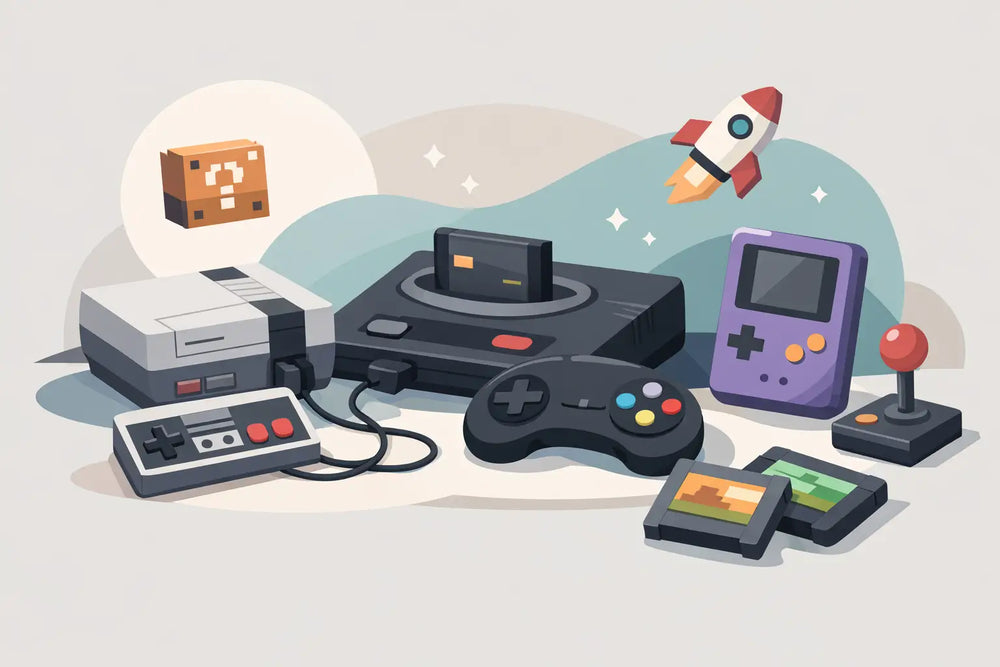
A lot of people ask what is retro game console when they start collecting, setting up an older TV stand, or trying to replay the games they grew up with. The short answer is simple: a retro game console is an older gaming system from a previous hardware generation that is no longer current, usually tied to physical media, discontinued accessories, and a specific era of game design. The longer answer matters more, because in game collecting, repair, and resale, “retro” is not always a fixed line.
What Is a Retro Game Console, Exactly?
In practical terms, a retro game console is a system from an earlier period of gaming history that people still buy, play, collect, and maintain. That can include home consoles like the NES, Sega Genesis, PlayStation 1, Nintendo 64, Dreamcast, and PlayStation 2. For some buyers, handhelds like the Game Boy Advance or PlayStation Portable fit the same category.
The reason this gets fuzzy is that “retro” means different things depending on who you ask. A collector might call anything two or three generations old retro. A casual player might only use the term for cartridge-based systems. A repair shop might think in terms of parts availability, aging hardware, and obsolete video outputs. All three views are valid, but they’re solving different problems.
If you’re shopping, selling, or repairing, the useful definition is this: a retro console is older hardware that sits outside the current mainstream market, but still has active demand because of nostalgia, game libraries, collectibility, and original hardware appeal.
Why the Definition Changes From Person to Person
Gaming moves fast. A system that felt modern fifteen years ago may now need specialty cables, battery replacements, optical drive work, or internal cleaning. That changes how people talk about it.
For example, most players would agree that an Atari 2600 is retro. Same for the Super Nintendo and Sega Saturn. Once you get into later hardware like the Xbox 360, Wii, or PlayStation 3, opinions split. Those systems are old enough to have a strong nostalgia market, but new enough that some people still think of them as “modern classic” rather than fully retro.
That’s why strict dates don’t always help. The better question is how the system exists in the market now. Is it discontinued? Are original accessories harder to find? Do buyers care about model revisions, video output, region locks, or disc condition? If the answer is yes, you’re likely dealing with retro territory.
The Common Traits of Retro Consoles
Retro consoles usually share a few traits, even when the exact generation is up for debate.
First, they belong to a discontinued hardware line. Manufacturers are no longer actively supporting them as current products, even if digital storefronts or repair options still exist in limited form.
Second, they are tied to older formats and connection standards. That could mean cartridges, memory cards, composite cables, RF adapters, proprietary power bricks, or optical drives that have seen years of wear.
Third, they carry a different kind of value than a current console. With a new system, most buyers care about performance and active game releases. With a retro console, buyers often care just as much about condition, originality, complete in box (CIB) status, color variants, serial labels, and whether the hardware has been repaired or modified.
Finally, retro consoles tend to need maintenance. Dust buildup, dried thermal material, failing lasers, dirty contacts, worn out controller buttons, and aging capacitors are all part of the reality. That doesn’t make them a bad buy. It just means older hardware comes with a different set of expectations.
Retro Does Not Always Mean Rare or Expensive
This is where newer collectors get caught off guard. A console can be retro without being especially rare, and it can be common without being cheap.
The original PlayStation is a good example. It’s absolutely retro by most standards, but it was produced in huge numbers. That means loose systems are often available. At the same time, specific revisions, boxed units, or clean tested examples can still command more money.
The same goes for the Nintendo Wii or PlayStation 2. Massive install bases keep a lot of units in circulation, but that doesn’t guarantee every console is in good condition. A tested, clean, fully working unit with matching accessories is worth more than an untested console pulled from storage with a third party cable and a worn out controller.
For collectors, retro value is usually about a mix of age, condition, demand, and survivability. Rarity matters, but so does whether the system still works the way it should.
Why People Still Want Original Retro Hardware
Emulation has made old games more accessible, but original consoles still matter for a reason. The experience is different.
Part of that is accuracy. Original hardware runs games the way they were built to run, with the timing, controller feel, loading behavior, and display quirks that players remember. On some systems, especially cartridge based ones, that physical interaction is part of the appeal. You’re not just launching a ROM. You’re using the actual machine.
Part of it is collecting. A shelf of original Nintendo, Sega, Sony, or Microsoft hardware means something to hobbyists in a way a downloaded file does not. Physical media, original controllers, regional variants, and complete packaging all have collector value that software-only solutions can’t replace.
And part of it is reliability in a different sense. Emulation can be excellent, but setup varies. Original hardware, once cleaned and working properly, gives you a straightforward way to play the real thing. Put in the cart or disc, power it on, and go.
What Counts as Retro for Buyers and Collectors
If you’re buying, “retro” usually matters less as a label and more as a buying category. It tells you what to check.
With an older console, you want to know whether it has been tested, whether the controller ports work, whether the disc drive reads properly, whether the cartridge slot has been cleaned, and whether the video output is stable. Cosmetic wear also matters more than people think, especially for collectors who want matching serials, clean shells, and original accessories.
It also helps to know which version of the console you’re getting. Some revisions are more reliable. Some have better video output. Some are easier to repair. Some are preferred by modders, while others are better left stock. Retro buying is rarely just about the console name. Model details matter.
That’s one reason specialty shops hold their value in this space. A tested console from a business that understands platform specific issues is not the same as a random marketplace listing with “powers on” in the description.
What Is a Retro Game Console in the Repair World?
From a service standpoint, a retro console is aging hardware that still deserves support because people actively use it. That changes the conversation from nostalgia to maintenance.
A Super Nintendo may need pin cleaning or power troubleshooting. A GameCube may need disc read work. A PlayStation 2 might have laser issues, controller port problems, or heavy dust buildup inside the shell. Older Xbox systems may have capacitor concerns. Even durable systems eventually need attention if they’ve spent years in storage, garages, or entertainment centers packed with dust.
That’s why condition claims should always be taken seriously. “Works” can mean a lot of things. It might boot once. It might run perfectly for hours. It might read one game and fail on another. With retro hardware, testing standards matter.
If you’re building a collection you actually plan to use, maintenance is part of ownership. Cleaning, cable replacement, battery swaps, thermal servicing, and controller repair are normal, not unusual.
The Difference Between Retro Consoles and Retro-Inspired Consoles
There’s also a difference between an actual retro game console and a modern device designed to imitate one.
A mini console, FPGA system, emulator handheld, or plug-and play box can deliver a retro style experience, but it is not the same thing as original hardware. That doesn’t make it worse. In some cases, it’s cheaper, easier, and more practical, especially if you want HDMI output and less maintenance.
But if you care about authenticity, collecting, or using original media, those modern alternatives are separate categories. A retro inspired console plays with the past. A real retro console is part of the past.
That distinction matters when you’re shopping. Some buyers want convenience. Others want the original board, shell, controller, and game format. Knowing which camp you’re in saves time and money.
So, When Does a Console Become Retro?
There’s no single official year when a console crosses the line. In real world buying and collecting, a system usually starts being treated as retro when it is no longer current, its original accessories and games become a secondary market category, and ownership starts involving preservation as much as play.
That’s why the term is useful even if it’s not perfectly precise. It tells you that the console belongs to an earlier era and comes with its own standards for authenticity, condition, compatibility, and care.
For most people, that’s enough. If the system is old, discontinued, still loved, and worth keeping running, it fits the spirit of retro. And if you’re buying one, treat it less like a cheap old gadget and more like hobby hardware that deserves a proper check before it goes on your shelf or under your TV.