
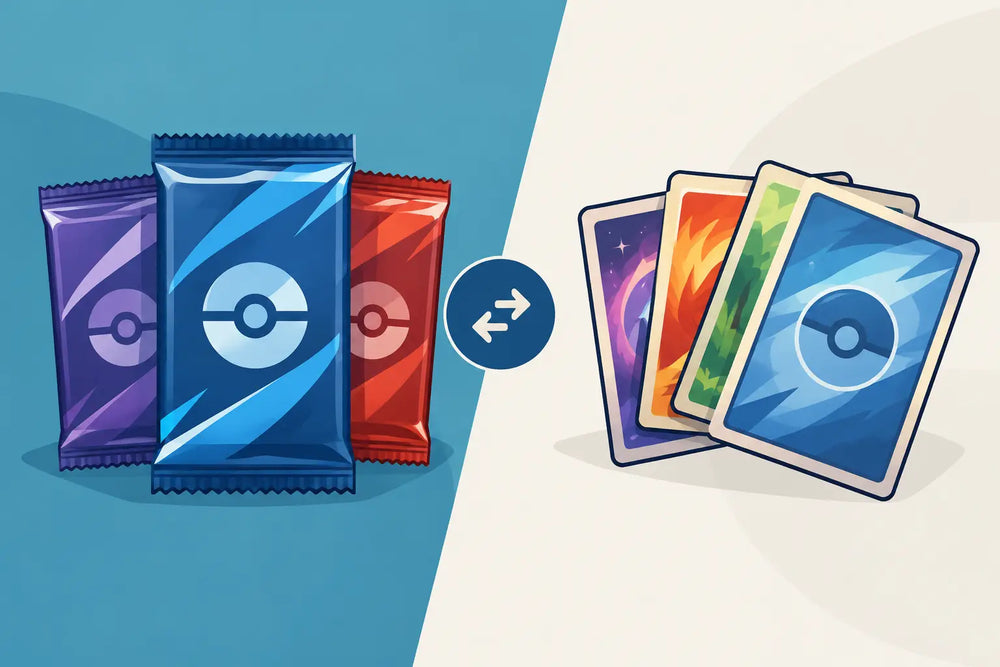
A booster pack can turn an ordinary visit to the card shop into a great story. You hit the card you needed, pull something worth grading, or finally open the artwork you have been chasing. But sealed packs vs singles is not really a question of which is better. It is a question of what you want your money to do.
If you are building a deck, finishing a binder page, collecting sealed product, or just opening packs with friends, the right choice changes. Knowing the trade-offs helps you buy with a plan instead of spending more than you meant to chasing one card.
Sealed Packs vs Singles: The Basic Difference
Sealed packs give you the opening experience and a chance at multiple cards. A booster may contain commons, uncommons, rares, foils, tokens, inserts, or special treatments depending on the set. You are paying for random contents, plus the fun of not knowing what is inside.
Singles are specific cards sold individually. You know the card, version, condition, and price before you buy it. That makes singles the direct route when you need four copies for a deck, want a particular Pokemon for a binder, or are looking for one exact printing.
The key difference is control. Packs offer variance. Singles offer certainty. Neither choice is automatically smarter, but each one solves a different problem.
What you are really buying with sealed packs
A sealed pack is not just a lottery ticket. For many players and collectors, the opening itself has value. Draft nights, prereleases, pack battles, opening a new set at home, and sharing pulls with friends are all part of the hobby.
Packs also give you cards you would not have bought as singles. That can be useful early in a set, especially if you play Limited formats or enjoy sorting through new commons and uncommons. Sometimes a random pull becomes a new deck idea.
Still, do not confuse a chance to pull a card with a plan to acquire it. If the card is the reason you are buying, calculate what several packs cost compared with the single. The answer is often clear quickly.
What you are really buying with singles
Singles save time, reduce randomness, and make budgets easier to control. If you need a specific commander, land cycle, playset, or alternate-art card, buying it directly means your purchase immediately moves your deck or collection forward.
Singles also let you choose condition. Near Mint, Lightly Played, and more heavily played copies can all make sense depending on your goal. A player may prefer a clean but affordable copy for a deck, while a collector may hold out for a sharper copy with better centering and surfaces.
Cost, Pull Odds, and the Chase Card Problem
The most common mistake in trading cards is treating packs as the cheapest way to get one expensive card. They usually are not.
A set's best card may be worth far more than the average pack because it is difficult to pull, useful in competitive play, popular with collectors, or all three. Opening ten packs without finding it does not make the eleventh pack more likely to pay you back. Every pack is its own random result, subject to the set's print and collation patterns.
That does not mean packs are a bad purchase. It means the value has to include the experience. If you budget $30 for opening packs because you enjoy opening packs, that is a reasonable hobby purchase. If you budget $30 because you need a $12 card, buying the single is usually the practical move.
Prices also move. A card can drop after release as more product is opened, then rise later if it becomes a format staple. Sealed product can change in price too, particularly after it is out of print. Nobody can promise where either market will go, so buy collectible product because you actually want to own it, not because a price chart made it look guaranteed.
Buy Packs When the Experience Is the Point
Sealed packs make the most sense when you want randomness on purpose. They are a good fit for players who want to draft, collectors who enjoy seeing a full set unfold, and anyone opening product as part of a game night.
They can also be useful at the start of a new release. Opening a reasonable amount gives you trade material, basic deck pieces, and familiarity with the set. After that initial opening, singles are often the more efficient way to fill the gaps.
For sealed collectors, condition matters beyond the cards inside. Keep packs, boxes, bundles, and other sealed products away from moisture, direct sunlight, crushing weight, and extreme temperature swings. A dented box may still be unopened, but packaging condition affects collector appeal.
Be careful with loose packs, especially older product. A factory-sealed booster box, a sealed collection box, and an individual loose booster pack are not equivalent purchases. Loose packs may be perfectly legitimate, but packaging, sourcing, and retailer reputation matter. Buy from sellers who stand behind what they sell and can clearly describe the product condition.
Buy Singles When You Have a Specific Target
Singles are the better route for constructed decks. Magic players building a Commander deck or tuning a 60-card list do not need the rest of a booster pack when they are missing one key card. The same goes for Pokemon collectors finishing a set, assembling a character page, or replacing a damaged card.
Buying singles is especially useful when you need multiple copies. Four packs may contain four cards, but not necessarily the four copies you need. A direct purchase lets you choose the quantity and avoids a pile of duplicates you did not want.
This is where condition details deserve attention. Check the listed condition, language, printing, foil treatment, and edition before buying. A card can have the correct name but still be the wrong version for your collection. For higher-value cards, inspect the front and back under good light after purchase and sleeve the card right away.
Authenticity matters too. Counterfeits exist, particularly for in-demand cards. Established specialty shops have a reason to protect their reputation, and knowledgeable staff can help explain printings, condition labels, and whether a card fits what you are trying to build.
A Better Way to Split Your Card Budget
You do not have to choose one side forever. Most longtime players do best with a mix: packs for events and enjoyment, singles for goals.
Before checking out, ask yourself four questions:
- Am I opening this because I enjoy the set, or because I want one card?
- Would this money finish a deck or binder page more effectively as singles?
- Do I need cards for Limited play, trading, or a group opening?
- If I miss the chase card, will I still be happy with what I bought?
A practical approach is to set an opening limit for each release. Open the amount that feels fun and affordable, sort what you pull, trade what you do not need, then switch to singles for the remaining wants. That keeps the hobby enjoyable without turning every missing card into another round of packs.
The Best Choice Depends on Your Goal
If you are preparing for a draft, sealed packs are required. If you are one card short of a tournament deck, singles are the obvious answer. If you collect unopened product, focus on clean, properly stored sealed items. If you collect favorite characters, artists, or treatments, singles give you better control over condition and presentation.
There is also room for the middle ground. Pick up a few packs from a set you genuinely like, then buy the cards that make your deck work. Trade duplicates locally. Ask for condition details before purchasing high-value singles. That is how many experienced collectors keep the hobby fun without losing track of the budget.
The best pull is always exciting, but the best purchase is the one you are still happy with after the wrappers are gone.