
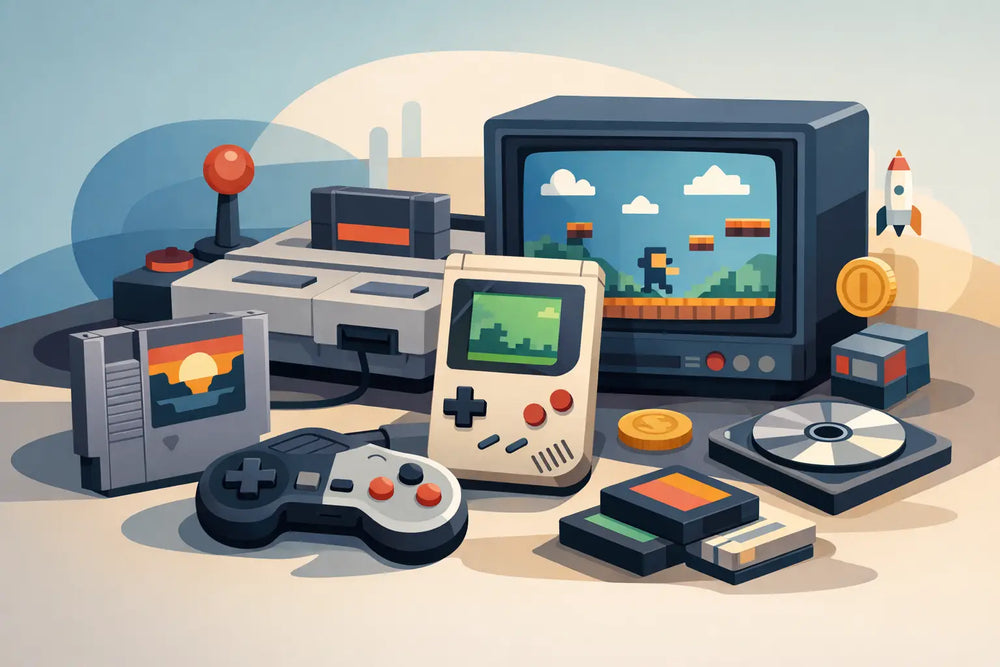
That first retro pickup usually feels simple. You spot a cartridge you grew up with, or a console you missed the first time around, and suddenly you are checking price stickers, label wear, and whether the save battery still works. If you are wondering how to start collecting retro games, the best move is to slow down and build a plan before the shelf starts filling up with random buys.
Retro game collecting gets expensive fast when you chase everything at once. It gets a lot more enjoyable when you collect with a purpose, understand condition, and know the difference between a fun pickup and a bad deal. The goal is not to own every old game. The goal is to build a collection you actually care about.
How to start collecting retro games without wasting money
The biggest beginner mistake is buying broadly instead of buying intentionally. A lot of new collectors grab anything that looks old and cheap, then realize six months later they have a pile of sports titles, duplicate controllers, and consoles that need work. Start narrower.
Pick one lane first. That could be one console, one brand, one generation, or one type of game. Maybe you only want original Xbox horror games, Super Nintendo RPGs, Sega Genesis shooters, or Nintendo handhelds. A tighter focus helps you learn market prices, spot condition issues faster, and avoid impulse buys that do not fit your collection.
Budget matters too. Retro collecting has changed. Plenty of games that were bargain-bin material ten years ago are now serious purchases, especially complete copies in strong condition. Decide what your monthly number is before you start hunting. If your budget is modest, that is fine. It just means you should be more selective and probably avoid chasing the highest-demand titles right away.
There is also nothing wrong with collecting loose carts, disc-only copies, or cosmetic rough-but-playable pieces if your priority is playing the games. Not every collection has to be mint, complete, and display-ready.
Start with what you actually want to own
A good collection usually begins with familiarity. Start with games you played, systems you owned, or platforms you always wanted but never got around to buying. Nostalgia is not a bad reason to collect. It is usually the reason people stick with it.
That said, personal interest should be stronger than hype. If everyone online is chasing a certain survival horror title but you do not care about the genre, skip it. Hype buying is one of the easiest ways to overspend.
A simple way to stay focused is to make a want list before you shop. Break it into three groups: must-have games, nice-to-have games, and long-term grails. That keeps you from blowing your budget on something flashy when what you really wanted was a clean copy of a game you have been looking for all year.
Pick the right condition for your budget
Condition is where beginners either get smart fast or overpay fast. In retro games, condition can change value a lot, but not every flaw matters equally.
For cartridges, look at label damage, discoloration, cracks, writing on the shell, and whether the pins are clean. For disc-based games, check the manual, case hinges, artwork quality, and disc surface. Light marks are common. Deep scratches are where risk goes up, especially if you cannot test the game. With cardboard-box systems like NES, SNES, Nintendo 64, and Game Boy, box wear can make a huge price difference.
If you are buying to play, prioritize function over perfection. A cartridge with a worn label but solid board and clean contacts may be a better buy than a prettier copy with hidden issues. If you are buying for display or long-term collector value, then condition becomes more important, but expect to pay for it.
When possible, ask direct questions. Has the game been tested? Has the disc been resurfaced? Is the save battery still holding? Is the manual original? Are there any cracks or repairs to the case? Straight answers save headaches.
Learn how pricing really works
One of the quickest ways to improve as a collector is to stop thinking in terms of old game equals cheap game. Age does not set the price. Demand, rarity, platform popularity, condition, and completeness do.
A common game on a popular Nintendo platform can cost more than a rarer title on a less-collected system. A complete copy with original inserts can sell for far more than a loose one. Black label versus greatest hits, first print versus later print, and regional differences can matter too.
This is why platform knowledge matters. If you are focused on one system, you will start recognizing fair pricing faster. You will know when a copy is priced well for its condition and when it is inflated because someone saw a high online listing and assumed that was the market.
Be careful with deal fever. Just because something is below average market price does not automatically make it worth buying. If it is a title you do not want, or the condition is bad enough to bother you later, it is not really a deal.
Where to buy retro games and what to watch for
If you are serious about how to start collecting retro games, buy from places where condition and authenticity are taken seriously. Local game shops, trusted collectors, conventions, community groups, and specialty stores are usually a better starting point than random online listings with weak photos.
The big advantage of buying from a real game shop is consistency. You can inspect condition, ask questions, compare copies, and sometimes test hardware before you commit. Shops that also handle repairs and resurfacing tend to understand functionality better than general resellers. That matters when you are buying older hardware that may need maintenance.
Online marketplaces can still be useful, but they require more caution. Watch for repro cartridges, swapped cases, counterfeit labels, missing manuals described vaguely as complete, and photos that hide spine damage or disc wear. If the listing is light on detail, assume you are taking on more risk.
Garage sales and thrift stores still produce finds, but they are less reliable than they used to be. Treat them as bonus opportunities, not the core of your collecting plan.
Don’t ignore hardware and maintenance
A retro game collection is only as useful as the hardware behind it. Buying a stack of original PlayStation games does not help much if your console has a dying laser. The same goes for consoles with bad HDMI output mods, dirty cartridge slots, weak power supplies, or controllers with drift and worn buttons.
If you are collecting original hardware, budget for upkeep. Older systems often need cleaning, new save batteries, disc drive attention, thermal service, or controller repair. That does not mean retro hardware is unreliable. It means it is old, and age catches up to electronics.
This is another reason to build slowly. A few tested games on a well-maintained system are better than a giant backlog you cannot actually play. If you have access to a trusted local shop that handles console and controller repair, that support can save you from replacing gear that only needed proper service. For collectors around Prince George, that kind of hands-on help is part of what makes Game Quest useful beyond just shelf inventory.
Protect your collection from day one
You do not need museum-grade storage, but you do need basic care. Keep games away from moisture, direct sunlight, and big temperature swings. Store discs in their cases, cartridges upright or securely shelved, and boxes where they will not get crushed.
Clean hands matter more than people think, especially with cardboard-box games and glossy manuals. Avoid aggressive cleaning methods unless you know what you are doing. A bad attempt to remove sticker residue or marker can do more damage than the original flaw.
If you are collecting higher-value pieces, protective sleeves and cases make sense. For everyday shelf copies, just keeping things clean, dry, and organized goes a long way.
Build a collection you’ll still like in five years
There are different ways to collect well. Some people want a full set. Some want only childhood favorites. Some focus on variants, complete-in-box copies, or overlooked systems. None of those approaches is automatically better. The right one is the one you can afford, maintain, and stay interested in.
It also helps to leave room for your taste to change. A lot of collectors start with Nintendo, then move into Sega, PlayStation, Xbox, imports, or handhelds once they learn what they really enjoy hunting for. You do not need to lock yourself into one path forever. You just need enough focus to avoid turning your budget into clutter.
If you are new, the best advice is simple: buy slower than your excitement tells you to. Learn one platform, compare condition carefully, ask questions, and let your collection grow around games you actually care about. A good retro collection is not built in one weekend. It is built one solid pickup at a time.