
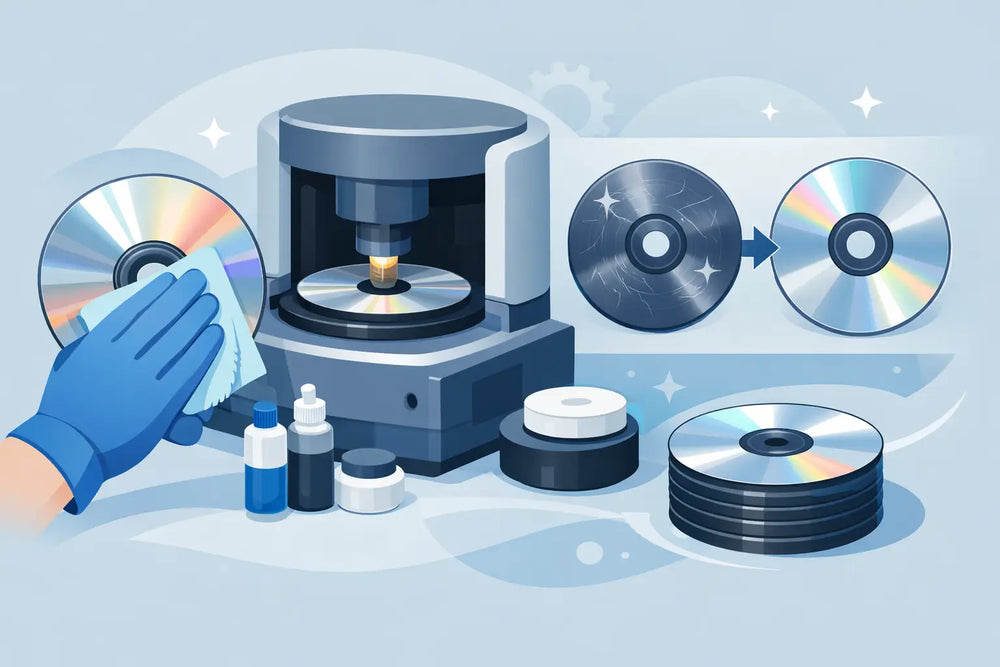
That moment when a game boots, spins up, and then freezes on a loading screen usually comes down to one question: is the data damaged, or is the surface just scratched enough to throw the drive off? A good disc cleaning and resurfacing service exists for exactly that gap between "works fine" and "looks ruined." For anyone buying, selling, collecting, or replaying physical games, knowing what the service can and cannot fix matters.
Physical media is tougher than people think, but it is not invincible. Used games move through a lot of hands. They get stacked loose, wiped with shirts, left in hot rooms, and shoved into old cases with cracked hubs. Some still read perfectly despite looking rough. Others fail because of one bad scratch in the wrong place. That is why surface condition has to be judged by function, not just appearance.
What a disc cleaning and resurfacing service actually does
At the basic level, cleaning removes grime, fingerprints, residue, and dust that can interfere with reading. Resurfacing goes a step further. It removes a very thin layer from the clear plastic side of the disc to reduce or eliminate surface scratches, then polishes the disc back to a smooth finish.
For game discs, that process can make the difference between a title that constantly errors out and one that installs or loads normally. It is especially useful for older used inventory, retro console games on optical media, and customer-owned discs that have seen years of regular use.
What resurfacing does not do is rebuild lost data. If the damage goes beyond the readable layer, or if the label side is compromised on formats where the data layer sits close to the top, resurfacing may not help at all. That is the part people often miss. A resurfacer improves the path the laser reads through. It does not perform miracles.
Why scratches matter differently from one disc to another
Not all discs fail the same way, and not all scratches are equally serious. A lot depends on the format, the depth of the scratch, and where the damage sits.
Light circular scuffs and haze from normal wear are often good candidates for a disc cleaning and resurfacing service. These are the kinds of marks that build up over time and interfere with clean reading. Deep gouges are less predictable. If you can catch a fingernail on the scratch, the odds get worse.
There is also a difference between scratches on the bottom and damage on the label side. On many disc formats, bottom-side scratches can sometimes be improved because the clear plastic gives you material to work with. Label-side damage is another story. If that side is pierced, flaked, or heavily scraped, the data layer itself may be gone.
Age and disc type matter too. Some retro and early DVD-based game formats are more forgiving than others. Some modern game discs install most data to a hard drive and only check part of the disc during play. Others stream data directly and will fail hard if the drive hits an unreadable section. That is why two discs with similar-looking wear can behave very differently.
Signs your disc is worth resurfacing
A lot of customers wait too long because they assume a non-working disc is finished. Others bring in every marked disc even when it still plays fine. The best approach sits in the middle.
If a disc has consistent read errors, trouble installing, skipping during the same scene, or dashboard-level recognition issues, resurfacing is worth considering. If the disc is valuable, hard to replace, sentimental, or part of a complete collection, it is usually worth checking before writing it off.
On the other hand, if the disc works perfectly and the wear is purely cosmetic, resurfacing may not be necessary. Every resurfacing process removes a small amount of material. A properly run machine is designed to do that safely, but it still makes sense to avoid unnecessary passes. Condition matters, but over-processing is not the goal.
When resurfacing probably will not help
This is the part where a no-nonsense shop saves people time. Some discs are beyond practical repair, and being honest about that is part of the service.
If the disc has cracks from the center hub, resurfacing is not the answer. Cracks can spread during use and may damage the drive. Heat warping is another bad sign. A bent disc may never track correctly no matter how clean the surface looks.
Label-side damage, disc rot, severe delamination, and deep structural gouges also lower the odds fast. In some cases, a disc can be cleaned and improved but still not become reliably playable. That does not mean the service failed. It means the damage was deeper than the polishable layer.
A good shop should tell you that upfront rather than promising every disc can be saved.
What to expect from a professional service
Professional resurfacing is not the same as trying a home remedy from a forum post in 2007. Toothpaste, random polish compounds, and hand-buffing tricks can make a disc look shinier while making the surface less consistent. Sometimes they do more harm than the original scratches.
A proper machine uses controlled abrasion and polishing designed for optical media. That gives a more even result and lowers the chance of introducing new swirl patterns or uneven spots. The process also starts with inspection. Some discs only need cleaning. Some need a full resurfacing cycle. Some should be rejected because the damage is too severe or the disc is unsafe to run.
That judgment call is a big part of the value. It is not just putting a disc in a machine. It is knowing when to clean, when to resurface, when to test, and when to say replacement is the better move.
Why this service matters for collectors and used game buyers
If you collect physical media, disc condition affects more than whether a game boots today. It affects value, confidence, and how comfortable you feel adding a used copy to the shelf.
For buyers, a tested and properly serviced disc reduces guesswork. For sellers and shops, resurfacing can recover inventory that would otherwise be unsellable or stuck in low-grade condition. For collectors, it can be the difference between replacing a favorite title at a premium or preserving the copy they already own.
There is a trade-off, though. Some collectors prefer untouched condition over resurfaced condition, especially on higher-end titles. That is fair. Original surface matters to some buyers. But for most everyday used games, readability comes first. A clean, tested disc with light resurfacing is usually more useful than an original but unreliable copy that fails during install.
This is where local service has an edge. A specialty shop can inspect the disc in person, talk through the format, and give a realistic view of the outcome. At Game Quest, that hands-on approach fits the kind of inventory and repair work physical media collectors actually need.
How to help your discs after service
Once a disc has been cleaned or resurfaced, storage habits matter. Put it back in a proper case. Avoid paper sleeves for anything you care about. Hold discs by the edges, keep them away from heat, and do not stack them loose near the console.
If a game is failing in one system but works in another, the issue may not be the disc alone. Dirty or aging laser assemblies, weak drives, and console-specific read issues can mimic disc damage. That is another reason it helps to bring problem media to a shop that also understands hardware. Sometimes the disc is not the whole story.
Is a disc cleaning and resurfacing service worth it?
Usually, yes, if the disc has actual reading problems, replacement cost is high, or the title is worth keeping. It is less compelling for common, cheap games that are easy to replace in better condition. The right answer depends on the title, the format, the severity of the damage, and whether the disc has collector value beyond basic playability.
What matters most is realistic expectations. Cleaning can solve dirt-related issues. Resurfacing can improve many scratched discs. Neither one can recreate missing data or undo structural damage. But when the problem is surface-level wear, professional treatment can save games people assume are done for good.
If you still care about physical media, this kind of service is not an extra. It is part of keeping a collection usable, tradable, and worth owning.