
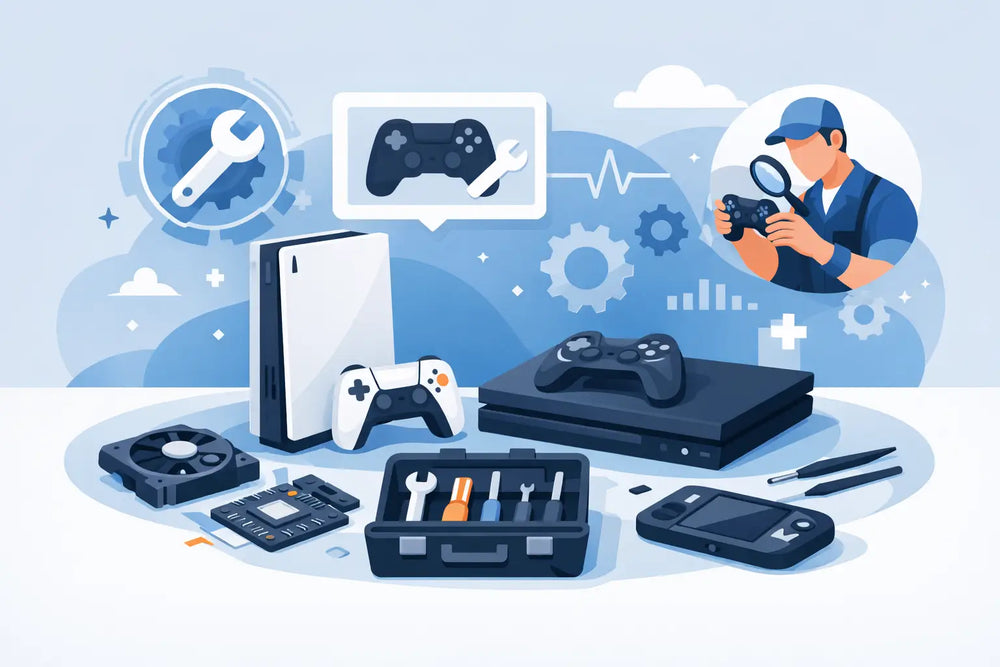
A console usually gives you a warning before it quits. The fan gets louder than normal. Games start freezing on load screens. A controller port gets loose. HDMI cuts in and out if the cable shifts even a little. By the time most people look for console repair and services, the problem has already gone from annoying to expensive.
That is why good repair work matters. Not every issue means a dead system, and not every console should be replaced the second it acts up. If you care about your save data, your physical game library, or the condition of older hardware, repair is often the smarter move. That is especially true for retro consoles, discontinued handhelds, and systems that are harder or more expensive to replace in clean working condition.
What console repair and services actually cover
A lot of people hear the phrase and think it only means major board level repair. Sometimes it does. More often, it starts with practical maintenance and targeted fixes that keep a system from getting worse.
Console repair and services can include HDMI port replacement, power issues, disc drive repair, controller repair, thermal servicing, fan replacement, deep cleaning, battery replacement on handhelds, charging port repair, and troubleshooting for systems that overheat, shut off, or fail to read games. For older hardware, it may also mean dealing with worn connectors, damaged cartridge slots, or aging internal components.
The key difference between real service work and a quick guess is diagnosis. A console that will not display video might have a bad HDMI port, a damaged encoder, a power rail fault, or a problem caused by a drop. The symptom looks simple. The fix may not be.
Why small problems turn into major repairs
Heat is one of the biggest reasons consoles fail early. Dust buildup chokes airflow, thermal paste dries out, and fans work harder to keep temperatures under control. That extra heat affects more than performance. It puts stress on chips, solder joints, and storage components over time.
A worn HDMI port is another common example. People keep using a system with a port that feels loose because it still works if the cable sits at the right angle. The trouble is that repeated movement can damage the port further and, in some cases, affect the board pads underneath. What could have been a straightforward port job can turn into a more involved repair.
Disc drives follow the same pattern. If a console struggles to read a disc, owners often assume the game is bad and keep retrying it. Sometimes the disc does need cleaning or resurfacing. Sometimes the drive itself has a laser or mechanical issue. Letting it grind away without checking the cause can wear things down faster.
Repair vs. replacement depends on the console
There is no one size fits all answer here. If you have a common current generation system with severe board damage, replacement might make more financial sense. If you have a limited edition console, a backward-compatible model, a clean retro unit, or a handheld with sentimental value, repair often has a much stronger case.
Collectors already understand this on the product side. Condition matters. Original hardware matters. Matching serials, clean shells, and functional disc drives matter. A repaired original console can still be far more appealing than a random replacement unit with unknown history.
For everyday players, the decision usually comes down to cost, availability, and data. A repair that brings back a system with all your installed content and saves can be a much better outcome than starting over with another used console that may have its own hidden issues.
The most common console issues we see
Some problems show up across nearly every platform. Overheating is near the top of the list, especially in systems that have never been opened for cleaning. Fans pulling dust for years at a time are not doing your hardware any favors.
HDMI damage is also common, particularly on systems that are moved often, plugged in and out regularly, or used in shared setups. Bent pins, loose ports, and no-signal issues are rarely random.
Controllers are another major category. Stick drift, broken triggers, failing buttons, charging issues, and worn ports can make a good console feel bad to use. In many cases, a controller repair is cheaper and more practical than tossing it and gambling on another used one. This is especially true in the case of TMR / Hall Effect upgrade options.
Older consoles bring their own set of problems. Cartridge slots get dirty or worn. Disc-based systems stop reading reliably. Handheld batteries age out. Hinges crack. Charging ports loosen. None of that is unusual. The question is whether the repair is done carefully, with the right parts and realistic expectations.
Why cleaning and thermal service are not just add-ons
Some customers treat deep cleaning or thermal service like optional extras. On neglected hardware, they are preventive repair.
Dust inside a console is not just cosmetic. It blocks vents, coats heat sinks, and makes fans less effective. Old thermal compound loses efficiency, which means the processor runs hotter for longer periods. If your console sounds like it is trying to take off every time you launch a game, there is a reason.
A proper cleaning and thermal service can reduce fan noise, improve temperature control, and help extend the life of the system. It will not fix every hardware fault, and it is not magic. But on many consoles, especially older or heavily used ones, it is one of the most cost-effective services available.
Choosing a shop for console repair and services
This is where experience matters more than broad promises. A good shop should understand the differences between platforms, common failure points, and what is actually worth repairing. Newer PlayStation, Xbox, and Switch hardware does not fail the same way older Sega, Nintendo, or Sony systems do. The tools, parts, and process should reflect that.
Clear communication is a big part of it. You want to know what the likely issue is, what the repair may involve, and whether the cost makes sense before work goes too far. Not every system is recoverable, and not every repair is worth doing. A trustworthy shop says that plainly.
Turnaround also matters, but speed should not be the only factor. Rushed work on a damaged HDMI port or a failing power circuit can create more problems than it solves. Careful diagnosis and solid workmanship are worth more than a fast guess.
For local players and collectors, this is where a specialty shop has an edge. A business like Game Quest deals with the hardware, the games, and the collector side of the hobby. That matters when you are bringing in a retro console, a limited edition handheld, or a disc-based system where both the machine and the media need attention.
When to bring your console in
If your console overheats, shuts down unexpectedly, stops reading games, has no video output, shows charging issues, or starts making unusual noises, do not wait for a complete failure. The same goes for physical damage to HDMI ports, USB ports, charging ports, and controller connections.
Bring it in earlier if the system has collector value or if replacement is not easy. The longer a problem is ignored, the higher the chance that wear spreads to other components. A loose port becomes torn traces. Heat stress becomes stability problems. A dirty system becomes a much hotter one.
If you are not sure whether the issue is with the console, the game, or the accessory, bring the full setup when possible. Testing the console with the controller, power supply, dock, or game that causes the issue can save time and cut down on guesswork.
Repair helps protect more than the console
A working console protects your library too. Disc drives that fail can scratch games. Dirty or damaged cartridge slots can create reading problems that people misread as bad cartridges. Weak charging ports can affect handheld use enough that systems get shelved instead of enjoyed.
For collectors, that matters because the hardware is part of the collection. For regular players, it matters because replacing a console is never just replacing a box. It is your saves, your setup, your installed games, and your time.
The best reason to take repair seriously is simple. Good hardware deserves maintenance, and failing hardware deserves a real diagnosis before it gets written off. If your console is acting up, get it looked at while the fix is still straightforward. Your games are not doing much good sitting next to a system that should have been serviced months ago.